For small and midsized businesses, the AI conversation is moving quickly from “What can this technology do?” to a much more important question: How do we use it safely, securely, and profitably?
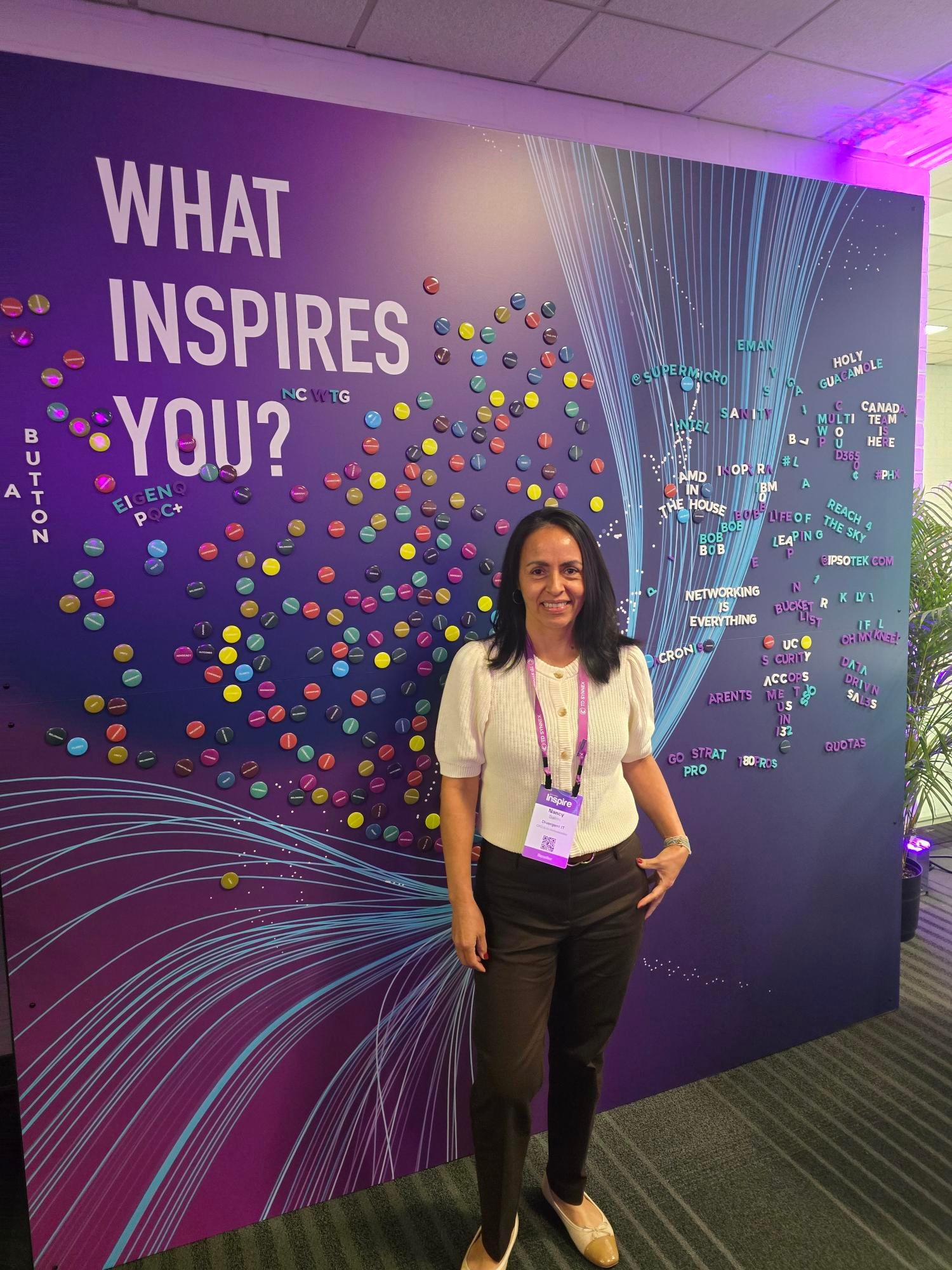
That shift was front and center at TD SYNNEX Inspire 2026, held October 7–10 in Greenville, South Carolina. The event explored agentic AI, token-based cost economics, security, AI-ready infrastructure, and the increasingly important role technology partners play as strategic advisors.
Several ideas from Inspire stood out to us at Divergent IT. Together, they point toward something bigger: AI isn't simply another application businesses will add to their technology stack. It changes how work gets done, how technology is consumed, and how organizations need to think about cybersecurity.
Here are five themes business leaders should have on their radar.
1. OPEN THE AGENT PLATFORM, SAFELY
AI is evolving beyond a tool that answers questions. AI agents introduce the possibility of technology taking action.
That distinction matters.
An employee might ask traditional AI to summarize information. An AI agent, depending on how it is designed and authorized, may become part of a workflow involving company information and business systems. That raises important questions about identity, permissions, data access, oversight, and governance.
The opportunity is significant, but businesses shouldn't interpret “open” as “uncontrolled.”
The better approach is to create an environment where innovation and governance develop together. Before expanding agentic AI, organizations should understand what data an agent can access, which systems it interacts with, what permissions are appropriate, and who owns the outcome.
This is especially relevant for financial services and healthcare businesses handling sensitive information. It's equally important for construction, electrical, plumbing, and other field-service companies where employees increasingly depend on cloud applications, mobile devices, and connected workflows.
Innovation without guardrails can create unnecessary exposure.
The goal is open, useful, and governed AI.
2. in the intelligent era, every answer has a price
One of the more interesting themes highlighted in the official TD SYNNEX Inspire 2026 recap was token-based cost economics.
That introduces a different way for business leaders to think about technology.
Historically, companies became accustomed to relatively predictable models: buy hardware, license software per user, and budget for recurring cloud services.
AI introduces another variable. Intelligence itself can have a consumption component.
Every question, workflow, automation, or agent activity may use computing and AI resources. That means companies should eventually be asking more than, “Can AI do this?”
They should also ask:
Is this the right task for AI, and does the business value justify the resources being consumed?
Consider an employee spending substantial time manually sorting information, preparing reports, or moving information between systems. If AI reduces that administrative workload and lets that person concentrate on customers or revenue-producing work, the economics may make sense.
But deploying AI everywhere simply because it is available is not a strategy.
For business leaders, AI optimization will increasingly require understanding both outcomes and consumption.
3. Security is the thread that connects it all
If there was one idea connecting nearly every technology conversation, it was security.
Cloud platforms, endpoints, identities, data, applications, and AI aren't independent technology conversations anymore. They are interconnected parts of the same business environment.
The Inspire recap specifically highlighted security alongside AI-ready infrastructure and productivity solutions.
We think that's an important distinction.
Security shouldn't be something businesses add after implementing AI. It needs to be part of the architecture from the beginning.
As organizations introduce new AI capabilities, they should revisit familiar cybersecurity fundamentals:
Who has access?
What information can they reach?
Are users and devices properly authenticated?
Is sensitive data appropriately protected?
Can suspicious activity be identified?
Does the business understand what technology is operating in its environment?
AI doesn't make those questions obsolete. It makes answering them consistently even more important.
4. No One Secures the World Alone: Collective Defense
Cybersecurity has never really been an individual sport.
Businesses depend on an ecosystem of technology providers, cloud platforms, cybersecurity companies, distributors, vendors, IT professionals, and their own employees. Each sees a different piece of the technology environment and threat landscape.
This leads to an important principle: collective defense.
No single product, vendor, employee, or technology provider should be expected to solve every cybersecurity challenge alone.
For an SMB, that philosophy can translate into something practical.
Your identity controls need to connect with your endpoint strategy. Your cybersecurity tools need to fit your cloud environment. Employee awareness needs to complement technical controls. Your technology partner needs to understand both your business objectives and your risk.
Inspire reinforced the broader importance of the technology-partner ecosystem, including security enablement.
At Divergent IT, this aligns closely with how we view modern IT: better outcomes happen when technology, people, processes, and trusted partners work together.
5. The technology partner has to become a strategic advisor
Perhaps the biggest takeaway from Inspire 2026 isn't about a particular AI tool.
It is about the changing role of the technology partner.
The official recap described the event's core message as generating real AI value by acting as a strategic advisor rather than simply reselling products.
That resonates strongly with us.
Our clients don't need more technology simply for technology's sake. They need help determining what technology makes sense for their organization, where AI can produce meaningful value, how cybersecurity fits into those decisions, and where unnecessary complexity can be eliminated.
That's where Divergent IT's mission remains highly relevant: empowering clients with out-of-the-box technology solutions, proactive IT management, and human customer service so they can focus on growth and success.
AI may change the tools.
It doesn't change the need for trusted guidance.
Where Do Businesses Go From Here?
The intelligent era creates enormous opportunity, but the businesses that benefit most won't necessarily be the ones deploying AI the fastest.
They'll be the ones deploying it intentionally.
Start by understanding where AI can solve a genuine business problem. Evaluate how it interacts with your data and systems. Establish appropriate security and access controls. Understand the economics. Then continue measuring whether the technology is delivering the outcome you expected.
The themes shared at TD SYNNEX Inspire 2026 point toward a future in which agents become more capable, intelligence becomes a measurable technology resource, and security connects the entire environment.
For Divergent IT, that's an exciting future because the fundamentals remain clear:
Innovate boldly. Secure intentionally. And never do either one alone.
KEY TAKEAWAY
AI agents can create meaningful new opportunities for SMBs, but adoption should be tied to business value, governed access, security, and a technology strategy that connects people, platforms, and trusted partners.